
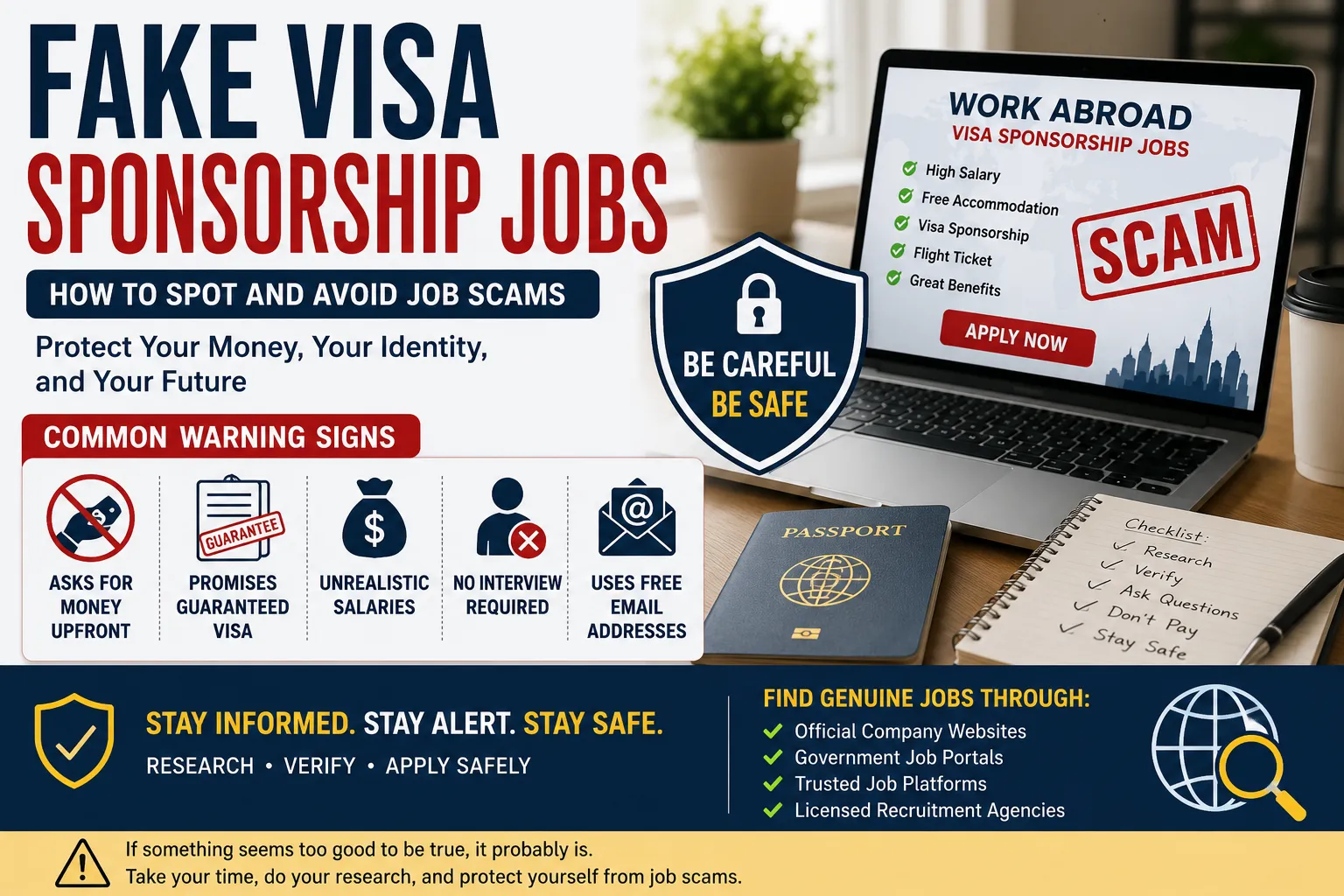
Fake Visa Sponsorship Jobs: How to Spot and Avoid Job Scams in 2026
Finding a job abroad can change your life. For many people, it’s a chance to earn a better salary, support their family, gain international experience, or simply start a new chapter in a different country. Every day, thousands of people search for visa sponsorship jobs in Germany, Canada, Australia, the UK, and many other countries.
Unfortunately, not every opportunity you see online is real.
Over the last few years, fake visa sponsorship jobs have become one of the biggest problems facing international job seekers. Scammers know that people are eager to work overseas, and they use that dream to trick them. They create fake websites, copy the names of well-known companies, post attractive job ads on social media, and send professional-looking emails that seem completely genuine.
At first glance, everything looks perfect.
The salary is excellent. The benefits sound amazing. The company promises free accommodation, visa sponsorship, and even a free flight ticket. It feels like you’ve finally found the opportunity you’ve been waiting for.
Then, just before the hiring process moves forward, they ask you to pay a “visa processing fee” or a “security deposit.”
That single request is where many people lose hundreds—or even thousands—of dollars.
The sad part is that these scams don’t just cost money. They also waste time, destroy confidence, and sometimes expose personal documents like passports and identity cards to criminals.
The good news is that you don’t have to become another victim.
Once you understand how these scams work, they’re much easier to recognize. Most fake recruiters follow the same pattern, and they often make the same mistakes. By learning a few simple checks before applying for any overseas job, you can avoid unnecessary risks and focus only on genuine opportunities.
In this guide, we’ll walk through everything you need to know about fake visa sponsorship jobs. You’ll learn the warning signs to watch for, how real employers hire international workers, where to search for legitimate jobs, and the practical steps you can take to protect yourself during your job search.
What Are Fake Visa Sponsorship Jobs?
Before learning how to avoid scams, it’s important to understand what they actually are.
Simply put, fake visa sponsorship jobs are job offers created by scammers to steal money or personal information from people looking for work abroad.
The scammers pretend to be employers, recruitment agencies, or immigration consultants. They advertise attractive jobs with impressive salaries and promise to sponsor your work visa. In reality, there is no job waiting for you.
Their only goal is to convince you to send money or share sensitive documents.
Some scammers ask for a registration fee. Others request payment for visa processing, medical tests, or work permits. In some cases, they don’t ask for money immediately. Instead, they build trust over several weeks before asking for a larger payment.
That’s what makes these scams so dangerous—they don’t always happen overnight.
Modern scammers invest time in making their offers look believable. They may use company logos, official-looking documents, email signatures, and even fake interview invitations to convince you that everything is genuine.
Why Are Fake Visa Sponsorship Jobs Becoming More Common?
If you’ve noticed more overseas job advertisements on Facebook, WhatsApp, LinkedIn, or Telegram recently, you’re not imagining it.
The demand for international workers has increased in many countries. Germany needs skilled workers in healthcare, engineering, logistics, and construction. Canada continues to hire workers in agriculture, transportation, hospitality, and healthcare. Similar opportunities exist in Australia, New Zealand, and several European countries.
This demand has created genuine opportunities—but it has also attracted scammers.
Criminals know that people searching for international jobs are often willing to act quickly when they find a good opportunity. They take advantage of that excitement by creating fake vacancies that look almost identical to real ones.
The internet has made this easier than ever.
Today, someone can build a professional-looking website in a few hours, copy information from a real company, create fake social media pages, and start advertising jobs that don’t exist.
To someone who has never worked abroad before, it can be very difficult to tell the difference between a genuine employer and a scammer.
That’s why researching every job offer is so important.
The Most Common Fake Visa Sponsorship Job Scams
Not every scam looks the same, but most of them follow a similar pattern.
Knowing these tricks can help you spot a fake offer before it becomes a costly mistake.
1. The “Processing Fee” Scam
This is by far the most common scam.
You apply for a job and receive good news a few days later. The recruiter tells you that you’ve been selected and congratulates you on getting the position.
Naturally, you’re excited.
Then they explain that you need to pay a small amount before they can begin your visa application.
They might call it:
- Visa processing fee
- Immigration charges
- Embassy registration
- Security deposit
- Work permit fee
- Medical examination fee
At first, the amount may seem reasonable. Some scammers even ask for a small payment to gain your trust before demanding more money later.
Once they’ve received the payment, communication suddenly stops.
The phone number becomes unreachable.
Emails go unanswered.
The website disappears.
And the job you thought you had never existed.
One simple rule can save you from this scam:
Legitimate employers hire people because they need workers—not because they want applicants to send them money.
2. Fake Recruitment Agencies
Some scammers don’t pretend to be employers. Instead, they create fake recruitment agencies.
These websites often look professional. They may include office photos, customer testimonials, and lists of available jobs in Germany, Canada, Australia, or the UK.
Everything appears genuine.
But once you register, you’re asked to pay a membership fee or an application fee before they can connect you with employers.
In reality, there are no employers.
Always check whether a recruitment agency is licensed in the country where it operates. A quick search can often reveal reviews, complaints, or official registration details.
3. Fake Company Websites
One of the most convincing tricks involves copying the website of a real company.
Scammers may use a web address that’s almost identical to the genuine one. At first glance, you probably won’t notice the difference.
For example, a legitimate company might use:
A scammer might create:
The website may even display the same logo, images, and company information.
That’s why you should never rely only on the link sent to you by a recruiter. Instead, search for the company yourself and compare the details.
4. Fake Email Addresses That Look Real
Here’s something many people don’t realize: scammers don’t always contact you from strange-looking email addresses. Some of them go the extra mile to make everything appear professional.
You might receive an email with the company’s logo, a polished signature, and even links to what looks like the official website. At first glance, everything seems legitimate.
But take a closer look at the email address.
A real company usually sends emails from its own domain, such as:
Scammers often use free email services like Gmail, Yahoo, or Outlook.
Examples include:
Some scammers even register domains that are almost identical to the real company’s website. They might replace one letter or add an extra word, hoping you won’t notice.
Before replying, compare the email address with the one listed on the company’s official website. If they don’t match, that’s a warning sign.
5. “Congratulations! You’ve Been Hired.”
Everyone likes hearing good news, especially when they’ve been searching for a job for months.
That’s exactly why scammers use this trick.
You apply for a job on Monday, and by Wednesday you’ve already been “selected.” No interview. No questions about your experience. No discussion about your skills.
Just a message saying:
“Congratulations! You have been chosen for this position.”
While that sounds exciting, it should also make you suspicious.
Think about it from the employer’s perspective.
If a company is investing thousands of dollars to sponsor someone’s visa and relocate them to another country, wouldn’t they want to know more about that person first?
Most genuine employers will want to speak with you through a video interview or phone call before making an offer. They may also ask for references or additional documents.
If someone offers you a job without trying to learn anything about you, slow down and investigate further.
6. Salaries That Sound Too Good to Be True
One of the easiest ways scammers attract victims is by advertising unbelievable salaries.
You might come across an advertisement that says:
- Warehouse Worker – €8,000 per month
- Cleaner – €7,000 per month
- Farm Worker – €6,500 per month
- Hotel Staff – €7,500 per month
It sounds amazing.
But ask yourself one question:
Does this salary match the type of work?
Every country has average salary ranges for different jobs. While salaries vary depending on experience and location, they’re rarely as high as scammers claim.
Before getting excited about an offer, spend a few minutes researching the average salary for that position. A quick search can save you from falling into a scam.
10 Warning Signs You Should Never Ignore
Scammers can be convincing, but they usually leave clues behind. If you notice several of these warning signs together, it’s best to stop and investigate before moving forward.
They ask for money before you start working.
This is one of the biggest red flags.
Whether they call it a visa fee, registration charge, or security deposit, be careful. Genuine employers don’t sell jobs.
They promise guaranteed visa approval.
No employer, recruiter, or consultant can promise that your visa will be approved.
Visa decisions are made by the immigration authorities of the country you’re applying to—not by the company.
They pressure you to act immediately.
You may receive messages like:
“Pay today or you’ll lose your job offer.”
“Complete the payment within 24 hours.”
Scammers create urgency because they don’t want you to take time to verify the opportunity.
A genuine employer understands that you’ll need time to read the contract and ask questions.
The company has little or no online presence.
Try searching for the company.
Can you find:
- An official website?
- A LinkedIn page?
- Employee reviews?
- News articles?
- A registered business address?
If the only information you can find is the job advertisement itself, that’s a reason to be cautious.
The job description is very vague.
Real companies usually explain:
- What you’ll be doing.
- Where you’ll be working.
- Your working hours.
- Your salary.
- Required qualifications.
- Employee benefits.
Scam advertisements often avoid details and focus only on attractive promises.
They avoid answering simple questions.
A genuine recruiter should be happy to answer questions like:
- What type of visa will I receive?
- Who is sponsoring my visa?
- Can I speak with your HR department?
- Where is the workplace located?
If the recruiter becomes defensive or changes the subject, don’t ignore it.
How to Verify a Genuine Employer
Before accepting any overseas job offer, spend a little time confirming that the company is real.
A few minutes of research can protect you from losing your money or sharing your personal information with scammers.
Visit the Official Website
Don’t rely on links sent through email or WhatsApp.
Instead, search for the company yourself using Google.
Check whether the website includes:
- A physical office address
- Contact phone numbers
- Company registration details
- Careers page
- Privacy policy
Professional companies are usually transparent about who they are and how they operate.
Contact the Company Directly
If you’re unsure whether a job offer is genuine, contact the company using the contact information listed on its official website.
You can send a simple email asking:
“I recently received a job offer claiming to be from your company. Could you please confirm whether this vacancy is genuine?”
Many companies appreciate being informed about scams using their name.
Search for Employee Reviews
Websites such as Glassdoor and LinkedIn can provide useful information about a company.
Read reviews from current and former employees.
While every company receives some negative reviews, a complete lack of information or dozens of scam complaints should make you think twice.
Check the Company’s Social Media
Most established employers have active social media accounts.
Look for:
- Regular posts.
- Employee interactions.
- Company updates.
- Hiring announcements.
An account created only a few weeks ago with very few followers may not be trustworthy.
Ask Questions During the Hiring Process
Don’t be afraid to ask questions.
Professional employers expect candidates to do their research.
Some useful questions include:
- What type of employment contract will I receive?
- Will there be an interview?
- Who is responsible for my visa application?
- Can you provide your company registration number?
- When can I expect to start work?
A genuine recruiter won’t be offended by these questions.
In fact, they’ll usually appreciate that you’re taking the process seriously.
Where to Find Genuine Visa Sponsorship Jobs
After reading about scams, you might wonder whether genuine visa sponsorship jobs even exist.
The answer is yes, they absolutely do.
Thousands of companies hire international workers every year. The difference is that legitimate employers follow a proper hiring process. They advertise real vacancies, conduct interviews, explain the job clearly, and never pressure candidates into sending money.
The safest approach is to apply through trusted platforms instead of random social media posts or messaging groups.
Here are some of the best places to start.
1. Official Company Career Pages
If you already know the company you’d like to work for, visit its official careers page.
Large companies usually advertise vacancies directly on their own website. Applying through the company’s website also reduces the risk of dealing with fake recruiters pretending to represent that business.
Whenever possible, apply directly instead of using unknown third parties.
2. Government Job Portals
Many countries have official employment websites where verified employers advertise vacancies.
These websites are among the safest places to search because they are managed by government organizations or trusted public services.
Before accepting any overseas job offer, it’s always worth checking whether the employer or vacancy appears on an official government employment website.
3. Professional Job Websites
Well-known job platforms invest significant effort into removing fake advertisements, although no platform can guarantee that every listing is genuine.
Trusted platforms include professional networking websites, international job boards, and industry-specific career pages.
Even then, remember to research the employer before applying.
4. Licensed Recruitment Agencies
Some companies hire international workers through recruitment agencies.
A genuine recruitment agency should be licensed, transparent about its services, and willing to answer your questions.
If an agency refuses to share its registration details or asks for large upfront payments, it’s best to walk away.
Tips to Avoid Fake Visa Sponsorship Jobs
Finding a job abroad doesn’t have to be risky if you build a few simple habits into your job search.
Here are some practical tips that can help protect you.
Research Before You Apply
Don’t let excitement replace common sense.
Spend a few minutes learning about the employer before sending your CV or passport.
Never Rush Into Payments
Scammers often create urgency by saying things like:
“The position will be given to someone else if you don’t pay today.”
A real employer won’t pressure you into making immediate financial decisions.
Keep Copies of Everything
Save your emails, interview invitations, contracts, and messages.
Having a record of your communication can be useful if questions arise later.
Protect Your Personal Information
Don’t send passport copies, banking information, or other sensitive documents unless you’ve confirmed that the employer is genuine and there’s a legitimate reason for requesting them.
Trust Your Instincts
If something feels unusual, don’t ignore it.
Maybe the recruiter keeps changing their story.
Maybe they avoid answering basic questions.
Maybe the salary sounds unrealistic.
Sometimes your instincts notice problems before your mind does.
Take your time.
What Should You Do If You’ve Already Been Scammed?
Realizing you’ve been scammed can be upsetting, but acting quickly may help reduce the damage.
Stop Communicating
Don’t send any more money or personal documents, even if the scammer promises they’ll solve the issue.
Contact Your Bank
If you’ve recently transferred money, contact your bank immediately.
Depending on the payment method and timing, they may be able to stop or recover the transaction.
Save Every Piece of Evidence
Keep copies of:
- Emails
- WhatsApp conversations
- Payment receipts
- Bank transfers
- Job advertisements
- Employment contracts
- Screenshots
This information may help if you report the scam.
Report the Scam
Report the fake job advertisement to the website or platform where you found it.
You should also report the incident to the relevant authorities in your country.
Reporting scams helps protect other job seekers from becoming victims.
Frequently Asked Questions (FAQs)
Are all visa sponsorship jobs fake?
No.
Many companies genuinely sponsor foreign workers every year. The key is verifying the employer and making sure the hiring process follows normal professional standards.
Can an employer ask me to pay for visa sponsorship?
In many cases, employers do not ask applicants to pay them directly to secure a job. Depending on the country and employment arrangement, you may have personal costs such as obtaining documents or attending a medical examination. However, you should be extremely cautious if someone asks you to transfer money to a recruiter’s personal account.
How can I tell if a recruitment agency is genuine?
Check whether the agency is licensed, has a physical office, clear contact information, and positive independent reviews. If you’re unsure, contact the agency directly and ask for its registration details.
Is it safe to apply for jobs through social media?
Some genuine employers advertise on social media, but scammers also use these platforms heavily.
Always verify the employer before sharing personal information or making any payment.
What is the biggest warning sign?
One of the biggest warning signs is being asked to send money before you’ve officially been hired.
A genuine employer hires people because they need workers—not because they want applicants to pay them.
Final Thoughts
Searching for work abroad is an exciting journey, and for many people, it leads to life-changing opportunities. However, it’s important to remember that not every job advertisement is genuine.
Scammers know exactly how to create convincing offers. They understand what job seekers want to hear, and they use that knowledge to gain trust.
The good news is that most scams follow predictable patterns.
If you take the time to research employers, verify job offers, ask questions, and avoid making rushed payments, you’ll already be far ahead of many applicants.
Whenever you receive an overseas job offer, don’t focus only on the salary or the benefits. Focus on whether the employer is transparent, professional, and willing to answer your questions.
A genuine opportunity will still be genuine tomorrow.
A scam usually disappears the moment you start asking difficult questions.
Stay informed, stay patient, and always choose trusted sources when applying for international jobs. Doing so won’t just protect your money—it will also help you build your career with confidence.
If you’re looking for legitimate opportunities, don’t miss our guide on Germany Visa Sponsorship Jobs, where we explain how to find verified employers and apply safely.
http://germany-jobs-visa-sponsorship-available
Related Articles You Can Link Internally
To strengthen your website’s SEO, link this article to other relevant posts on your site, such as:
- Germany Visa Sponsorship Jobs 2026
- Caregiver Jobs in Germany
- Warehouse Jobs in Germany
- Truck Driver Jobs in Germany
- Best Countries Hiring Foreign Workers
- Jobs That Don’t Require IELTS
Trusted External Resources (DoFollow)
Linking to authoritative sources can improve credibility. Consider referencing:
- European Employment Services (EURES): https://eures.europa.eu
- Make it in Germany: https://www.make-it-in-germany.com
- Government of Canada – Jobs: https://www.jobbank.gc.ca
- UK Government – Work Visas: https://www.gov.uk/browse/visas-immigration/work-visas



Leave a Reply